Introduction
This manual provides guidance for utilizing the '311 Circuits' book, a comprehensive collection of electronic circuit designs. It is intended for electronics enthusiasts, students, and professionals seeking practical circuit solutions and inspiration for their projects. The book covers a wide range of circuit types, from basic building blocks to more complex applications.
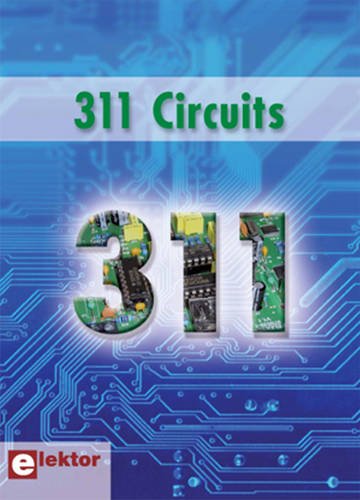
This image displays the front cover of the '311 Circuits' book. The cover features the title '311 Circuits' prominently, with the numbers '311' stylized to appear as if they are made of electronic circuit components. The background is a blue circuit board pattern, and the Elektor logo is visible in the bottom left corner.
Орнотуу жана даярдоо
Before embarking on circuit construction, ensure you have the necessary tools and a suitable workspace. While the book provides circuit diagrams, practical implementation requires a few essential items:
- Basic Electronic Components: Resistors, capacitors, diodes, transistors, integrated circuits (ICs), etc., as specified by individual circuit designs.
- Breadboard or PCB: For prototyping or permanent circuit assembly.
- Электр камсыздоо: A stable DC power supply, adjustable if possible, to provide the required voltages for circuits.
- Мультиметр: Essential for measuring voltage, current, and resistance for testing and troubleshooting.
- Soldering Iron and Solder: If assembling circuits on a Printed Circuit Board (PCB).
- Wire Strippers and Cutters: For preparing wires and component leads.
- Коопсуздук көз айнектери: To protect eyes during soldering or handling small components.
Familiarize yourself with basic electronic symbols and circuit diagram conventions before attempting to build complex circuits.
Operating and Building Circuits
Each circuit presented in '311 Circuits' includes a schematic diagram and often a brief description of its function. Follow these general steps when building a circuit:
- Understand the Schematic: Carefully study the circuit diagram. Identify all components and their values. Note any polarity markings for components like electrolytic capacitors, diodes, and ICs.
- Компоненттерди чогултуу: Collect all required components as listed in the circuit description. Verify their values and types.
- Assemble the Circuit:
- For breadboard prototyping, insert components and connect them using jumper wires according to the schematic.
- For PCB assembly, place components onto the board and solder them securely, ensuring correct orientation.
- Байланыштарды эки жолу текшериңиз: Before applying power, meticulously check all connections against the schematic. Look for short circuits, open circuits, and incorrectly placed components.
- Күчтү колдонуу: Connect the power supply to the circuit, starting with the lowest voltage if adjustable, and gradually increasing to the required operating voltage. Observe for any immediate issues like smoke or excessive heat.
- Сыноо жана текшерүү: Көлөмдү өлчөө үчүн мультиметрди колдонуңузtages at key points in the circuit as indicated in the book or as expected from circuit theory. Verify the circuit's intended function.
Always disconnect power before making any changes to the circuit to prevent damage to components or injury.
Техникалык тейлөө
Maintaining the '311 Circuits' book ensures its longevity and continued usability:
- Сактагыч: Store the book in a dry, cool place away from direct sunlight and excessive humidity to prevent paper degradation and ink fading.
- Колдонуу: Handle the book with clean hands to avoid transferring oils and dirt to the pages. Avoid bending the spine excessively to preserve its binding.
- Коргоо: Consider using a protective cover if the book is frequently used in a workshop environment to shield it from dust, spills, and physical damage.
Regular care will keep the circuit diagrams and text clear and readable for years to come.
Жалпы көйгөйлөрдү чечүү
When building circuits, it is common to encounter issues. Here are some troubleshooting tips:
- Электр схемасы иштебей жатат:
- Электр камсыздоо: Verify the power supply is connected correctly and providing the specified voltage.
- Байланыштары: Re-check all wire connections and component placements against the schematic. A single misplaced wire can prevent the circuit from working.
- Компоненттин багыты: Ensure polarized components (diodes, electrolytic capacitors, ICs) are oriented correctly.
- Component Values: Double-check that you are using the correct component values (e.g., resistor color codes, capacitor markings).
- Ашыкча жылуулук же түтүн: Immediately disconnect power. This usually indicates a short circuit or an incorrectly connected component. Identify and rectify the fault before reapplying power.
- Incorrect Output/Behavior:
- Тtage Ченөөлөр: Көлөмдү өлчөө үчүн мультиметрди колдонуңузtages at various points in the circuit and compare them to expected values.
- Компоненттин катасы: A faulty component can cause unexpected behavior. If possible, test individual components or replace suspect ones.
- Oscillation/Noise: Ensure proper decoupling capacitors are used near ICs and power rails to prevent instability.
- Үзгүлтүксүз иштөө: Check for loose connections, cold solder joints (if applicable), or fatigued wires.
Patience and systematic checking are key to successful circuit troubleshooting.
Техникалык шарттар
| Атрибут | Деталь |
|---|---|
| Жарыялоочу | Elektor Electronics Publishing (10 November 2011) |
| Тил | Англисче |
| Paperback Pages | 420 бет |
| ISBN-10 | 1907920080 |
| ISBN-13 | 978-1907920080 |
| Элемент Салмагы | 700 г |
| Өлчөмдөр | 17.2 x 2.3 x 23.3 см |
Кепилдик жана колдоо
As '311 Circuits' is a published book, it does not come with a product warranty in the traditional sense for electronic devices. Any issues related to the physical quality of the book (e.g., printing errors, binding defects) should be directed to the retailer or publisher, Elektor Electronics Publishing, within their respective return or exchange policies.
For technical support regarding the circuits themselves, the book serves as the primary resource. Community forums and online electronics resources can also be valuable for discussing specific circuit implementations or troubleshooting challenges.


